How Trail Running and Gravel Biking Are Redefining South African Adventure
- support67379
- Nov 30, 2025
- 5 min read

Part I: The Rise of Trail Running and Ultra-Marathons
South Africa boasts some of the most spectacular trail running in the world, and the sport is rapidly growing from an obscure niche into a mainstream passion.
From the rugged sandstone mountains of the Western Cape to the soaring basalt peaks of the Drakensberg, South Africa’s trails offer a testing ground unlike any other. The sport’s growth has been organic, fueled by a collective desire to trade congested tarmac for silent singletrack and the structured routine of city life for the unpredictable rhythm of nature. Trail running here isn’t just exercise; it's a deep, challenging conversation with the environment, and its popularity reflects a broader shift towards experiential wellness.
Showcasing SA’s Stunning Scenery
The cornerstone of this boom is a handful of world-class events that draw thousands of local and international competitors, cementing the country’s reputation as an ultra-running Mecca.
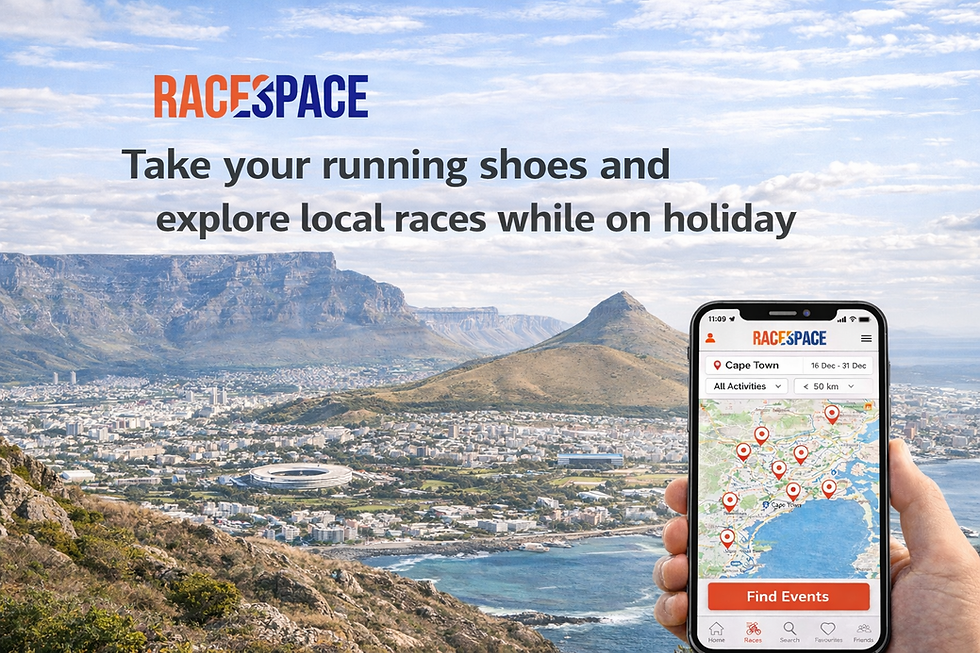
The Ultra-Trail Cape Town (UTCT) stands as the jewel in the crown. Circumnavigating the majestic Table Mountain range, this race—particularly the gruelling 100-mile distance—requires technical prowess, extreme endurance, and an ability to navigate quickly changing conditions. It’s a finale in the World Trail Majors calendar, ensuring it attracts the sport's elite, all while showcasing Cape Town’s stunning urban trails, from Llandudno to the slopes of Signal Hill.
Further inland, the Ultra-Trail Drakensberg (UTD) offers a completely different, high-altitude challenge. Set within the uKhahlamba Drakensberg Park, a UNESCO World Heritage Site, UTD forces runners to contend with dramatic escarpment climbs, thin air, and a rugged, truly remote landscape. Finishing this event is as much a testament to survival skills as it is to athletic preparation.
Then there is the legendary Otter African Trail Run, often called the ‘Grail of Trail.’ Famous for its reverse-direction challenge (the 'Retto') and its demanding, beautiful route along the Tsitsikamma coast, the Otter is short by ultra standards (just 42 km), but its technical difficulty and the race’s prestigious reputation make it an essential tick-box for any serious South African runner. These events don't just host races; they offer immersive, transformative experiences.
The Appeal of the Trail
The explosion in participation is intrinsically linked to the powerful draw of mental and physical wellness. In an increasingly stressful world, many runners turn to the trails as a form of moving meditation. The focus required to navigate roots, rocks, and steep descents forces a mindfulness that cuts through daily anxieties.
Moreover, the trail running community is renowned for its supportive, inclusive atmosphere. There is less emphasis on personal best times and more on shared adventure and camaraderie. Ultra-marathons, in particular, often involve runners spending many hours, even days, on the trail together, forging bonds that transcend the finish line. This strong sense of community provides the vital mental support needed to tackle the physical demands, making trail running a genuinely positive and accessible topic, regardless of competitive ability.
Local Heroes: The South African Dominance
The growth of these races has created a platform for incredible local talent, who now compete successfully on the global stage.
The pioneer of South African ultra-running, Ryan Sandes, remains an inspirational figure. His remarkable feats, including winning four of the world’s most prestigious 250km desert races and claiming victories at events like the Leadville 100, established the South African brand of mountain running—tough, gritty, and fiercely resilient.
More recently, the spotlight has shone on athletes demonstrating current dominance. Nicolette Griffioen has solidified her status as a true ultra-endurance force. She capped an extraordinary season by becoming the recent women’s winner of the UTCT 100 Miler, setting a new course record that shattered the previous mark. Her record-breaking run underscores the calibre and mental fortitude of South African female athletes. Alongside her, rising stars like Bianca Tarboton continue to make waves both locally and internationally, signalling a deep and exciting pipeline of talent ready to take on the world.
Part II: The Gravel Biking Revolution
While trail runners have staked their claim in the mountains, a quieter, yet equally dramatic, shift is occurring in the cycling world: The Gravel Biking Revolution.
Gravel biking, essentially a blend between road and mountain biking, is one of the fastest-growing cycling disciplines globally. It combines the speed and efficiency of a road bike (with dropped handlebars) with the robustness and wider tyres of a mountain bike, allowing riders to tackle dirt roads, jeep tracks, and remote back roads with confidence. This discipline is not just a passing fad; it is dramatically changing the South African endurance racing scene and opening up vast, forgotten swathes of the country to cyclists.
Changing Races: The Competition and Debate
The most fascinating aspect of the revolution is how gravel bikes are encroaching upon—and often dominating—traditional ultra-endurance mountain bike events.
Major South African multi-stage and single-day events, historically the domain of full-suspension mountain bikes, are seeing gravel bikes take the win. Events like the punishing Trans Baviaans 24-hour mountain bike race and The 36ONE MTB Challenge (a formidable 361km loop through the Karoo) have become battlegrounds. While the most technical mountain sections still favour traditional MTBs, the long stretches of fast, corrugated gravel and open roads are perfectly suited to the lighter, faster, and more efficient gravel machine.
This shift has created a fascinating competition and debate within the cycling community: Is the sport still ‘mountain biking’ if the winner is on a bike that looks more like a road racer? This technological evolution is forcing race organizers to rethink course design, equipment rules, and even the fundamental definition of these ultra-endurance challenges, keeping the scene dynamic and highly engaging.
Defining the Discipline
The trend is serious, and its growth is being validated by the creation of dedicated gravel races. South Africa is rapidly building a calendar that caters specifically to this new category of bike.
Leading the charge is the Swartberg 100 Gran Fondo, based in Prince Albert. This event has gained international recognition, successfully qualifying as a UCI Gravel World Championships qualifier. The race tackles the iconic Swartberg Pass, offering a mix of smooth gravel and brutally steep climbs, showcasing the beauty and challenge inherent in the discipline.
Equally significant is the introduction of new stage races, such as the Nedbank Gravel Burn. These multi-day events are dedicated entirely to exploring dirt road networks, giving riders the chance to experience remote areas and small towns without the high technical risk of rock gardens and singletrack inherent to full-on mountain bike stage races. The success of these focused formats proves that gravel biking has earned its own distinct space in the South African endurance landscape.
Safer, Remote, and Unbridled Freedom
The widespread appeal of gravel biking is multi-layered.
Firstly, it offers a way to ride through remote, beautiful locations—like the Karoo or the forgotten passes of the Eastern Cape—but on safer, less technically demanding routes than mountain biking. While mountain biking often involves high-consequence singletrack, gravel riding is about covering long distances on unpaved roads, making it accessible to a wider range of cyclists. This is a huge draw for road cyclists seeking refuge from traffic and mountain bikers looking for lower-impact, higher-mileage training.
Secondly, it taps into a deeply aspirational desire for freedom. Gravel bikes are the ultimate exploration machine; they allow cyclists to literally link up any dirt road, opening up maps previously closed to all but the most dedicated mountain bikers. The result is a simple, liberating experience that resonates deeply with the spirit of South African adventure.
A Landscape of Limitless Possibility
Whether you are pushing your boundaries on a 100-mile trail run through the Drakensberg or linking forgotten farm roads on a gravel bike in the Karoo, South African endurance sport is currently in a Golden Age.
These disciplines are not just fostering athletic prowess; they are offering modern antidotes to modern stress. They are aspirational, showcasing the stunning natural beauty of our country, and constantly highlighting the determination of our local athletes. The endurance scene is fiercely alive in our magnificent country!


Comments